For Doctors

Advancing Biliary Intervention Through MCA

Advancing Biliary Intervention Through Magnetic Compression Anastomosis (MCA)

Ansh Endo Magnets is committed to supporting gastroenterologists, interventional endoscopists, hepatobiliary surgeons, transplant specialists, and interventional radiologists with innovative Magnetic Compression Anastomosis (MCA) technology for the treatment of complex biliary strictures and complete bile duct transections.

Our MCA platform has been specifically developed for cases where conventional endoscopic and percutaneous techniques are unable to achieve guidewire traversal, offering a minimally invasive alternative to surgical reconstruction.
Why Consider MCA?

Management of complete biliary obstruction remains one of the most challenging areas in therapeutic endoscopy.

Traditional treatment approaches are often associated with:
  • Failure to traverse complete strictures
  • Need for complex surgical reconstruction
  • Increased morbidity and recovery time
  • Risk of infection and complications
  • Prolonged external drainage requirements

Magnetic Compression Anastomosis (MCA) addresses these challenges by creating a controlled bilio-biliary fistula through precisely engineered magnetic compression, offering a minimally invasive alternative to conventional surgical reconstruction.

Comprehensive MCA Solutions For Healthcare Professionals

Explore how Magnetic Compression Anastomosis (MCA) supports physicians in managing complex biliary strictures and complete bile duct transections. From patient selection and advanced magnetic technology to clinical outcomes, procedural workflows, and ongoing clinical support, Ansh Endo Magnets is committed to advancing minimally invasive biliary interventions through safe, effective, and innovative solutions.

Ideal Patient Selection
MCA may be considered in patients with:
  • Complete bile duct transection
  • High-grade benign biliary strictures
  • Post-cholecystectomy biliary injury
  • Post-liver transplant biliary strictures
  • Failed ERCP interventions
  • Failed guidewire traversal
  • Short-segment biliary strictures (< 2 cm)
Technology Highlights
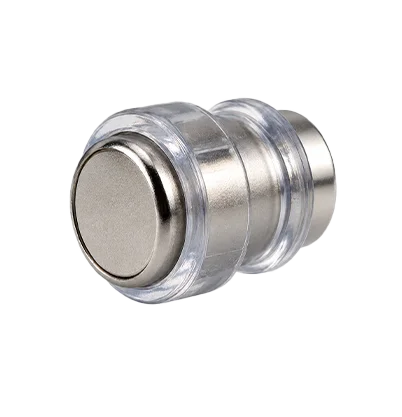
  • Miniaturized neodymium-based magnets
  • Gold-coated biocompatible design
  • Guidewire-compatible central lumen
  • Standardized delivery system
  • Dedicated retrieval platform
  • Controlled magnetic force
  • Imaging-guided procedural integration
Clinical Outcomes
Prospective clinical evaluation demonstrated:
  • 83% successful recanalization rate
  • Mean recanalization time of 21.5 days
  • Excellent safety profile
  • Minimal procedure-related complications
  • No restenosis in stent-free patients during follow-up
Clinical Benefits
  • Minimally invasive approach
  • Reduced need for surgical reconstruction
  • Improved patient comfort
  • Shorter hospital stay
  • Reduced infection risk
  • Potential long-term stent-free outcomes
  • Reproducible procedural workflow
Procedure Overview
  • PTBD access and tract preparation
  • Proximal magnet placement
  • Distal magnet placement via transpapillary route
  • Magnetic approximation and recanalization
  • Magnet retrieval
  • Stent placement
  • Long-term follow-up
Support for Physicians
Ansh Endo Magnets collaborates with healthcare professionals through:
  • Product training and education
  • Procedural guidance
  • Clinical support
  • Technical consultation
  • Ongoing innovation and research collaboration

Our goal is to empower physicians with advanced minimally invasive solutions that improve patient outcomes while reducing the burden of complex surgical intervention.

Partnering to Shape the Future of Biliary Care

Through innovation, clinical evidence, and physician collaboration, Ansh Endo Magnets is helping redefine the treatment of complex benign biliary strictures and complete bile duct transections.